
How to use “Pomodoro Technique” to Beat Procrastination

Understanding Procrastination
Procrastination is a multifaceted psychological phenomenon that affects many individuals, often leading to diminished productivity and increased stress. At its core, procrastination is the act of delaying tasks or responsibilities despite potential negative consequences. The causes of procrastination can be varied and complex, frequently intertwining with personal fears, motivation levels, and psychological traits such as perfectionism.
One common trigger of procrastination is the fear of failure. Individuals may put off starting or completing a task due to concerns about not meeting expectations or achieving desired outcomes. This fear can be paralyzing, causing a cycle where tasks are postponed, ultimately leading to increased anxiety as deadlines loom closer. In addition, a lack of intrinsic motivation can play a significant role; when individuals are not genuinely interested or invested in a task, they are more likely to procrastinate. Cultivating motivation through meaningful engagement can help mitigate this tendency.
Perfectionism is another significant factor that can lead to procrastination. Those who strive for flawless execution may hesitate to start a project when they fear their output may not meet their high standards. This struggle often results in a refusal to begin tasks or the endless revision of work without ever reaching a satisfactory completion. Recognizing these patterns is crucial for individuals aiming to address procrastination effectively.
Moreover, acknowledging one’s procrastination habits is a vital step towards overcoming them. Understanding how triggers impact productivity can enable individuals to develop strategies for better time management and task completion. By identifying personal habits and the emotions tied to procrastination, one can work to transform these behaviors and ultimately enhance goal achievement.
Introduction to the Pomodoro Technique
The Pomodoro Technique is a popular time management method that was developed by Francesco Cirillo in the late 1980s. Named after the Italian word for tomato, “pomodoro,” the technique utilizes a simple yet effective system to enhance productivity and combat procrastination. Cirillo initially used a tomato-shaped kitchen timer to track his work sessions, establishing the fundamental structure that continues to be instrumental for many individuals today.
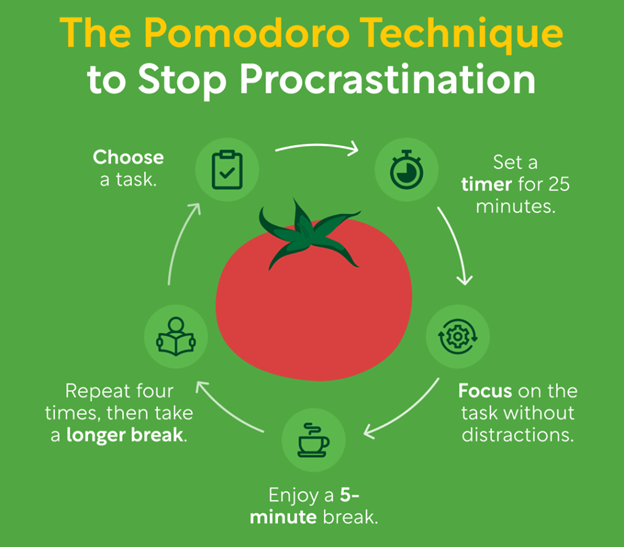
At its core, the Pomodoro Technique divides work into intervals, traditionally set at 25 minutes, referred to as “Pomodoros.” After each Pomodoro, a short break of 5 minutes is taken to allow the mind to rest and rejuvenate. Once four Pomodoros are completed, a longer break of 15 to 30 minutes is encouraged. This cyclical approach not only maintains focus but also promotes sustained energy throughout the work period. The frequent breaks are essential in preventing mental fatigue, making it easier to tackle complex tasks without feeling overwhelmed.
One of the significant benefits of the Pomodoro Technique is its ability to enhance focus. By committing to work for a set period, distractions can be minimized, leading to a more productive environment. Additionally, users often experience improved time awareness, as the technique encourages individuals to evaluate how their time is allocated. This self-assessment can lead to better planning and prioritization of tasks. Furthermore, the regular breaks contribute to decreased exhaustion, enabling individuals to maintain higher levels of performance over prolonged periods.
Overall, the Pomodoro Technique serves as an effective method for individuals looking to improve their time management skills and counteract procrastination. Its structured approach allows for enhanced concentration and provides a framework that is adaptable to various work styles and environments.
How to Implement the Pomodoro Technique
The Pomodoro Technique is an effective time management method that can significantly enhance productivity and focus. To successfully implement this technique into your daily routine, start by establishing a dedicated workspace. This area should be free from distractions and equipped with all the necessary materials required for your tasks. A clean, organized environment can foster a greater sense of clarity and motivation when you begin your work sessions.
Next, identify the tasks that require your undivided attention. These tasks should be specific and actionable, making it easier to set clear goals for your Pomodoro sessions. Once you have chosen your tasks, it’s time to get started. Set a timer for 25 minutes—this duration is known as one Pomodoro. During this interval, immerse yourself completely in your work, minimizing interruptions and focusing solely on the task at hand.
After the 25-minute period ends, take a short break of 5 minutes. This break is crucial in the Pomodoro Technique, as it allows your mind to rest and recharge. Use this time to stand up, stretch, or engage in a brief, refreshing activity, ensuring that you mentally detach from your work before the next session begins.
To maintain motivation throughout your work sessions, consider utilizing tools or apps specifically designed to support the Pomodoro Technique. Various applications offer timer functionalities, customizable work durations, and reminders to take breaks. Some popular choices include Forest, Focus Keeper, and Pomodone, which are tailored to help you effectively manage your time. By consistently applying these methods and utilizing the right tools, you can seamlessly integrate the Pomodoro Technique into your daily routine and enhance your overall productivity.
Overcoming Challenges with the Pomodoro Technique
The Pomodoro Technique, while effective for many, can present certain challenges that may hinder its successful adoption. One common issue is interruptions from external sources, such as colleagues, family, or phone notifications. These distractions can disrupt focus and lead to frustration, making it difficult to maintain productivity. To combat this, it’s essential to set clear boundaries with those around you. Inform colleagues or family members of your working hours and request their cooperation in minimizing interruptions during your focused time blocks.
Another challenge individuals may encounter is difficulty in assessing their workload. While the Pomodoro Technique is centered around structured work periods, understanding how many “Pomodoros,” or intervals, a specific task may require can be complex. For effective implementation, consider breaking down larger tasks into smaller, manageable components. By doing so, it becomes easier to estimate the number of intervals needed and thereby avoid overwhelming yourself with assessments. This method fosters a more accurate understanding of your progress and allows for better planning.
Creating a distraction-free environment is crucial for maximizing the benefits of the Pomodoro Technique. This can involve decluttering your workspace, utilizing noise-canceling headphones, or even disabling non-essential notifications on devices. By tailoring your environment to minimize distractions, you enhance your ability to focus during work sessions. Furthermore, the standard 25-minute work intervals may not suit everyone. It can be advantageous to experiment with adjusting these time frames based on your personal productivity rhythms. Finding a balance that works for you can lead to improved engagement and efficiency.
As you navigate these challenges, tracking your progress and celebrating small victories plays a vital role in maintaining motivation. Regularly review your achievements and acknowledge successes, no matter how minor they may seem. Embracing the journey of overcoming obstacles will ultimately enhance your productivity and reinforce the benefits of the Pomodoro Technique.
Recommended1 recommendationPublished in Productivity Tips




Responses